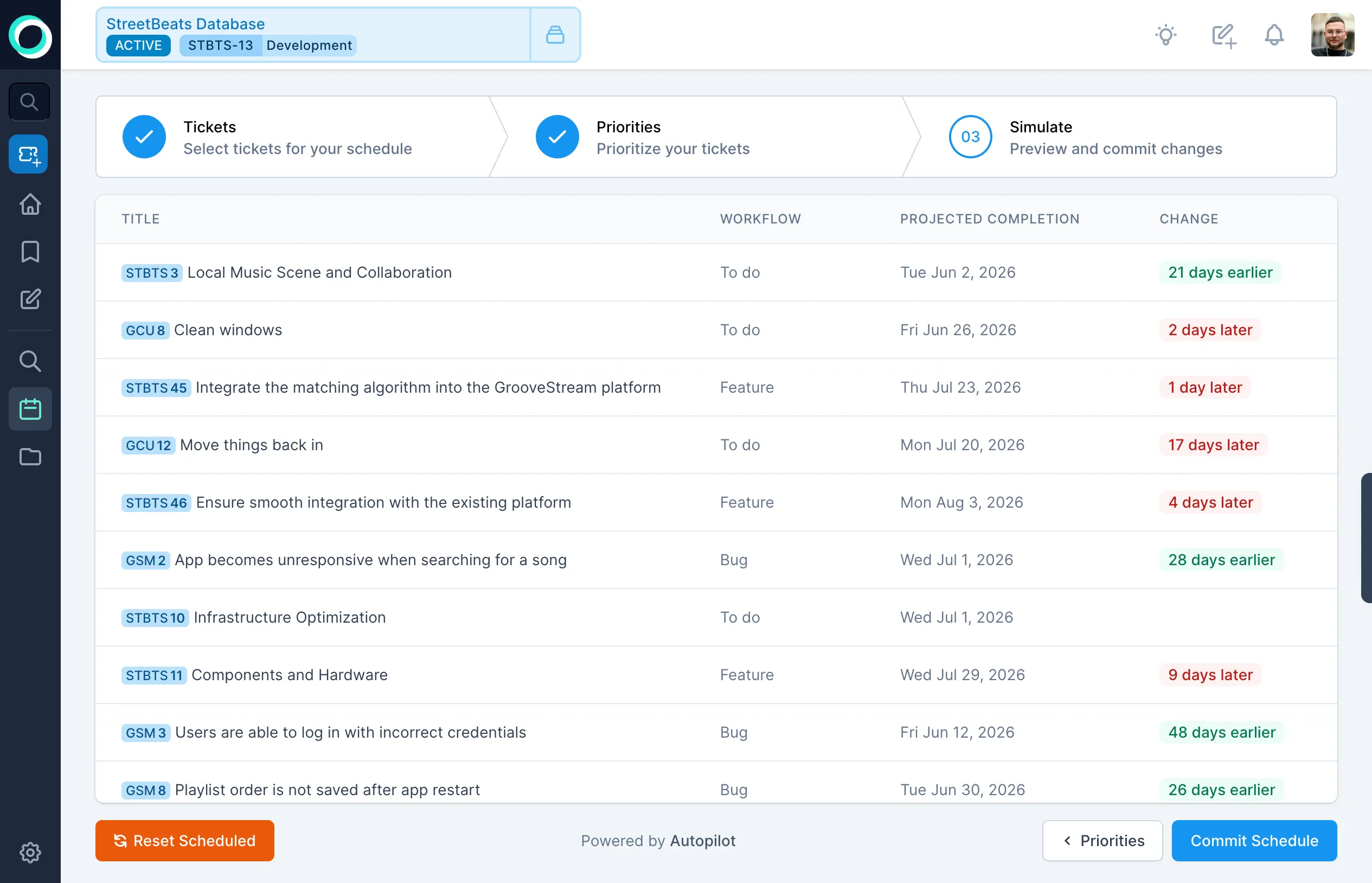
The project manager that runs Monte Carlo simulations of your team's workload. Ship dates you can trust, and plans you can change.
Every design choice follows from one question: what actually helps you decide?
Replanning meetings produce worse results than a minute of simulation. Stop debating delivery dates in a room — run the numbers.
Individual estimates are unreliable, but statistical models over a team converge. Three estimates per ticket create a beta distribution that the simulator samples from — probability, not guesswork.
If you ask people to log hours, they won't — or they'll lie. Orcha tracks time automatically. Just activate a task and switch when you switch. Your velocity data stays honest without effort.
P1/P2/P3 labels are broken — everything becomes P1. Orcha uses a single ordered stack where tickets, tags, and projects are ranked against each other. No ties, no ambiguity.
Linear workflows by design. Not because real work is simple, but because complex workflows create hidden states where work gets lost.
Best case, most likely, worst case. Three numbers per ticket — the right trade-off between accuracy and busywork. If Orcha asks for something, it's because the simulation needs it.
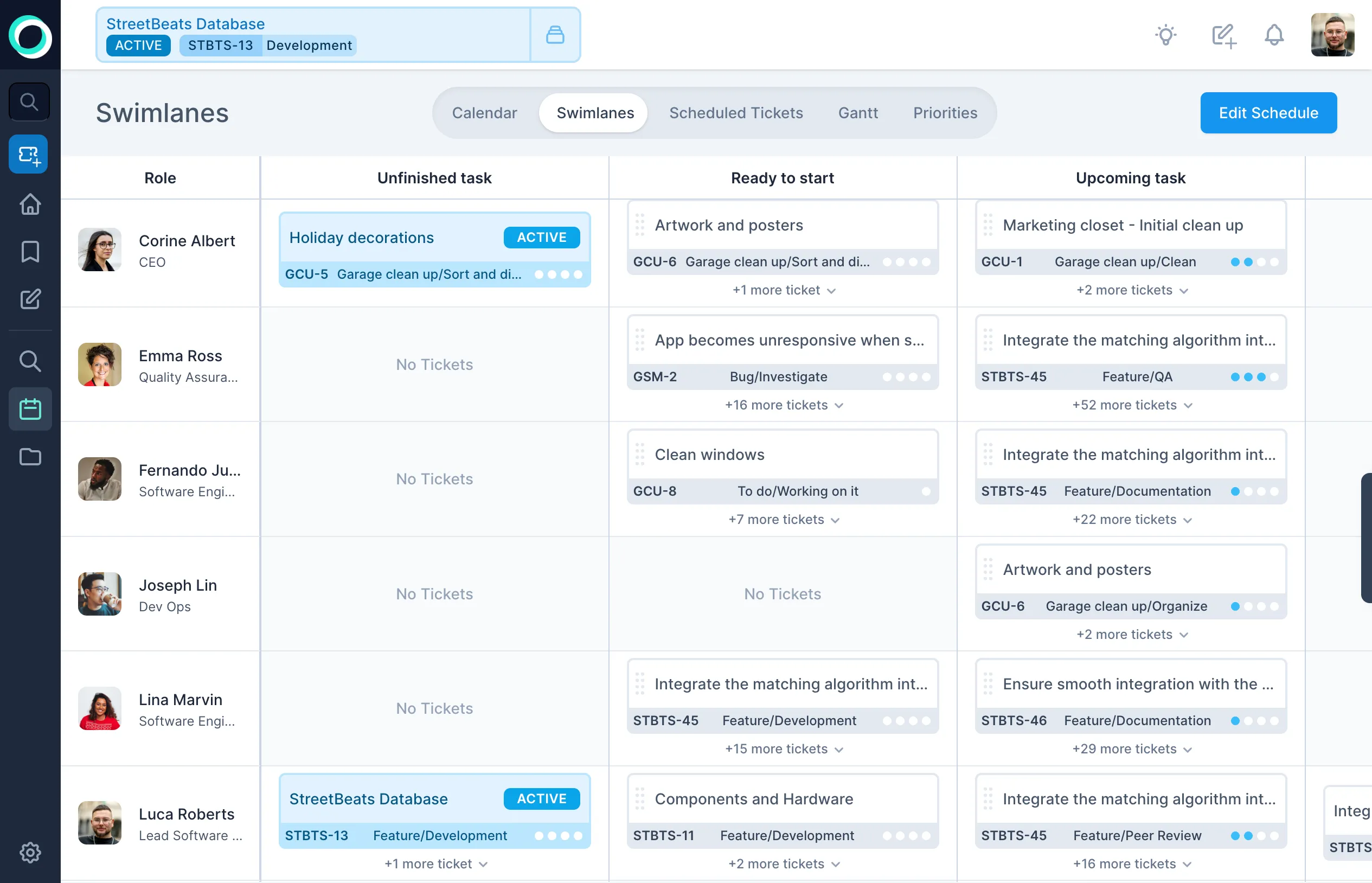
One row per engineer. Drag a ticket to reassign and the schedule recalculates — always respecting the priorities you've set.
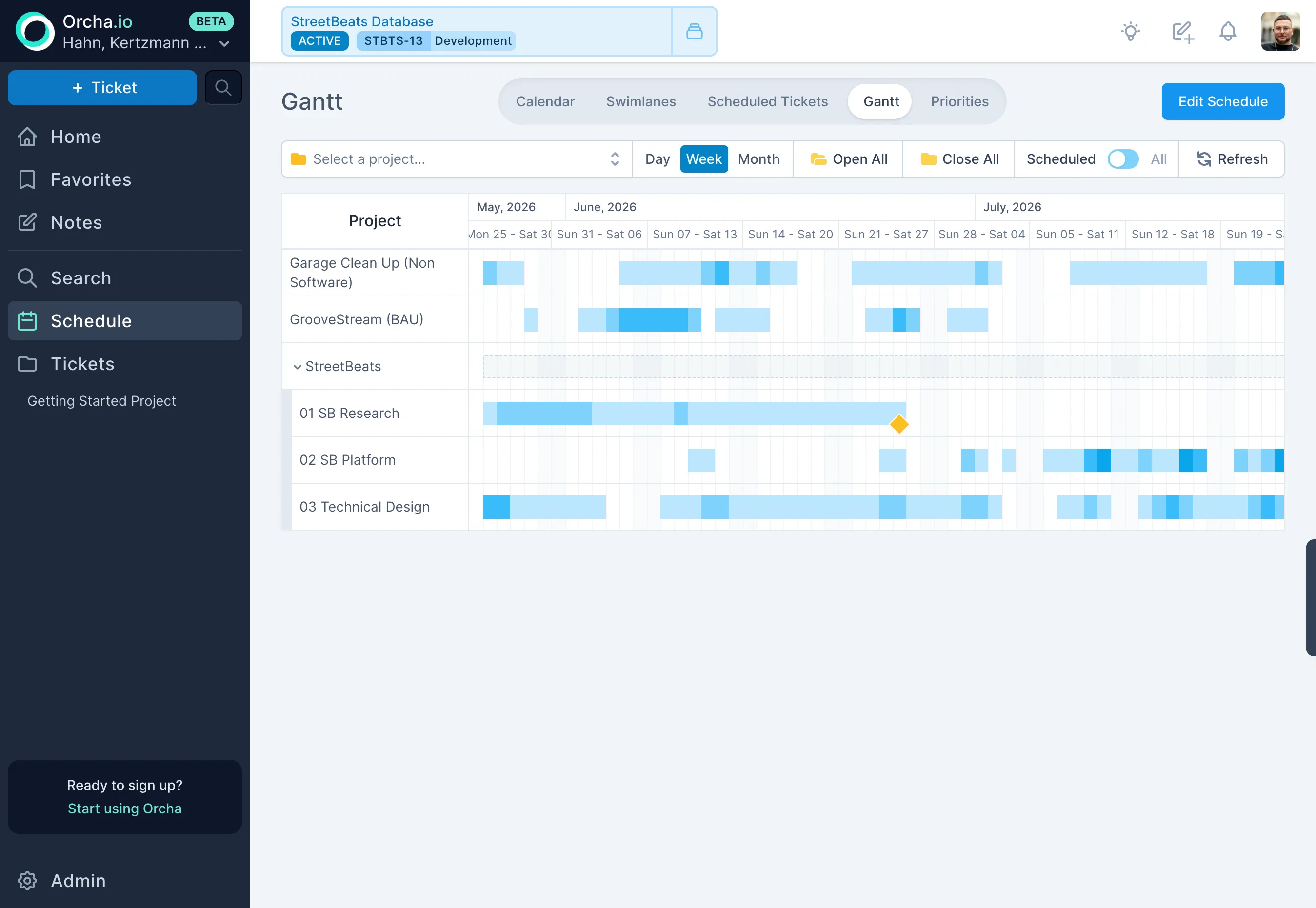
Project timelines at day, week, or month scale — computed by the simulator, not maintained by hand.
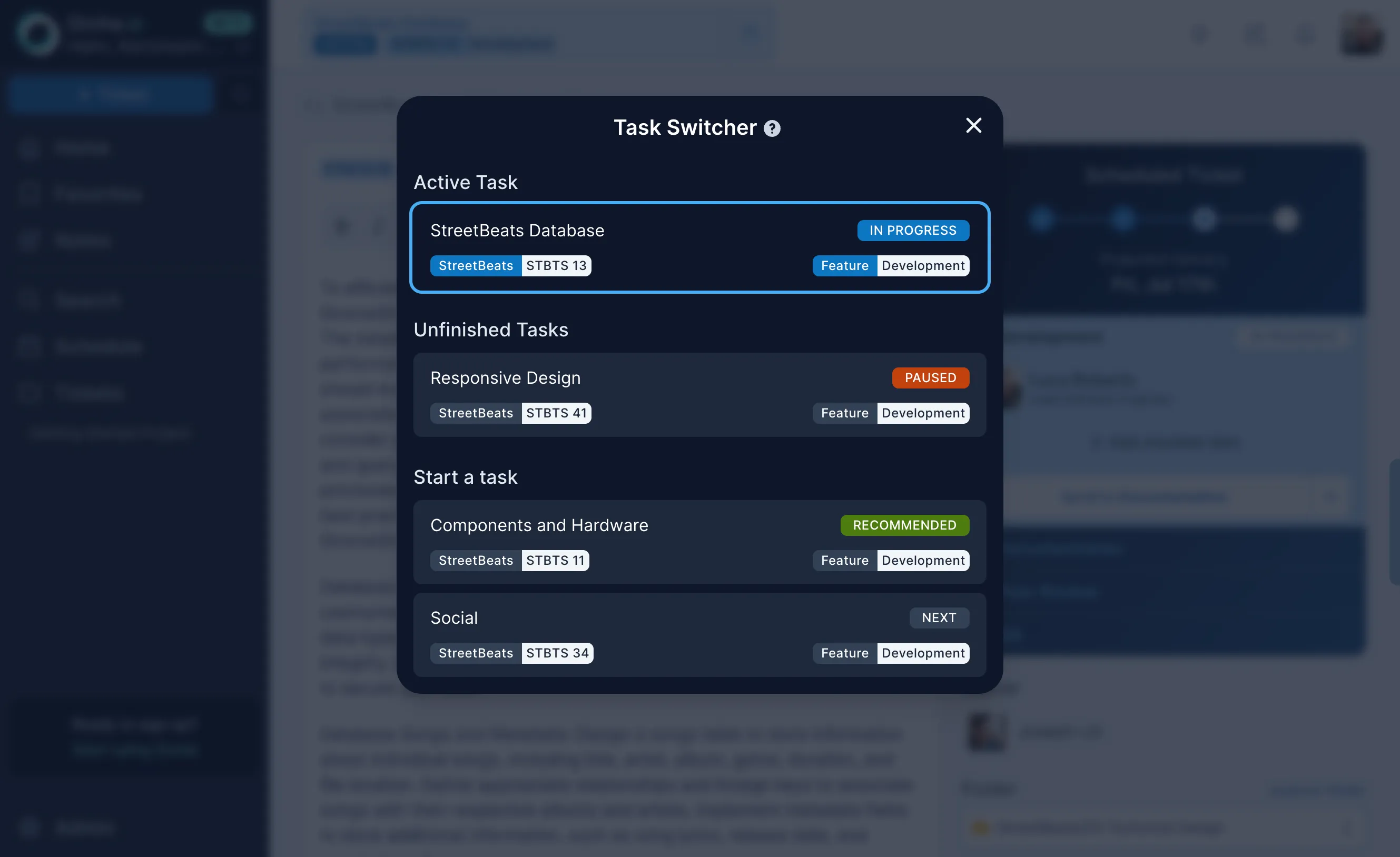
Your active task and recommended next, always visible. Click to switch — time tracking happens in the background.
Open source. Self-hostable. Licensed under FSL-1.1-MIT — free to use, converts to MIT after two years.